Use this list on every lighting bid. It follows the order of work in how to do a lighting takeoff, and each box is something that, when skipped, shows up later as a missed fixture, a wrong price or an RFI after award. Print the page, or keep it open next to the plans.
Before you count
- Every lighting plan for every floor and building, plus enlarged plans and the site or exterior lighting plan.
- The fixture schedule, the notes under it and the symbol legend.
- Keyed notes and general notes on each lighting sheet.
- Lighting control details, relay panel diagrams and sensor details.
- Panel schedules and the riser, for circuits and panel locations.
- The lighting and wiring sections of the specification.
- Architectural reflected ceiling plans for ceiling types and heights.
- Every addendum, with each sheet checked as the latest issue.
- A sheet list with the scale of each sheet, checked against a known dimension.
- The breakdowns the bid needs (building, floor, phase, alternate) set up before counting.
Fixture schedule
- Every type listed with its mark, description, mounting and voltage.
- Types that look alike but differ (size, mounting, catalog number) marked so they are counted apart.
- Types sold by length, and their lengths.
- How emergency fixtures are shown: their own types, a suffix, or hatching on the plan.
- Products named per type, "or approved equal" and any approved manufacturer list.
- Remarks such as finishes not yet selected, and accessories in the catalog cell.
- Types by others, owner furnished or under an alternate.
Counting fixtures
- Counted by type, sheet by sheet, with a mark on every symbol counted.
- The tag read on every fixture, not assumed from the symbol.
- Enlarged plans and matchline areas counted once.
- Fixtures on site, exterior, canopy and roof sheets included.
- Existing fixtures to remain, relocate or remove handled as their own items.
- "Typical" notes applied to every room they cover.
Emergency lighting and exit signs
- Emergency fixtures counted by type and again as emergency.
- Battery units, inverters or emergency circuits, as the drawings call for.
- Exit signs counted by type, with faces and mounting from the plan and the schedule remarks.
- Night lights and other "wire for continuous operation" fixtures noted for wiring.
Lighting controls
- Switches by kind: single-pole, three-way, four-way, keyed.
- Dimmers, including keyed notes that call for more than one per room.
- Occupancy and vacancy sensors, wall and ceiling, with their power packs.
- Low-voltage switches, touch screens, timers and relay panels.
- Daylight sensors and any control wiring they need.
Wiring
- Branch conduit measured along the circuits at the checked scale, with your routing allowance.
- Home runs counted by panel and checked against the panel schedules.
- Home-run lengths measured to the real panel locations, with the vertical runs.
- Drops to switches and sensors, fixture whips and pendant drops.
- Conductors per run from hash marks or the specification, plus emergency and control wiring.
- Wiring method per area (cable or conduit, exposed or concealed) from the specification.
Pricing
- Every type matched to a price list line or a current vendor quote, with expired quotes refreshed.
- A labor unit for every type and item, with condition multipliers for height, ceiling and access.
- Supports, lifts and equipment priced where the ceilings and heights call for them.
- Sales tax, overhead, contingency and profit applied as your company does.
- Inclusions, exclusions, alternates and the products you priced written into the proposal.
Final checks before the bid
- Every schedule type counted, or confirmed as not in this scope.
- Every tag on the plans found in the schedule, with RFIs for any that are not.
- For each type, the tags on the plans have counted fixtures beside them.
- Totals compared with a similar past job you know well.
- Open questions listed, with how you priced each one in the meantime.
How to use the checklist
- Tick it per bid, not per sheet. Some boxes (the addenda, the scale check, the schedule) are done once for the set; the counting boxes are done for every sheet.
- Keep it with the bid file. When a question comes up after award, a ticked list with notes shows what you looked at and how you priced it.
- Add your own lines. Every RFI and change order that cost you money on a past job is a line worth adding, such as a support detail you missed or a sensor that needed a power pack.
- Review it after award. Compare what was installed with what you counted, and add a line for anything that differed.
What an automated check looks like
The tag check in the final list is the slowest to do by hand, and the one that points straight at a missed type. Here is the review layer's output from a real run of InstantTakeoff's quick pass on one lighting plan sheet from a public bid set: one line per check, with what it found.
- Quick pass done: 450 fixtures, 31 exit signs, 69 controls
- Review pass: checking each type's tags on sheet E-101-B against the counted fixtures
- Type A: 71 of 71 tags matched to a counted fixture
- Type X: 65 of 65 tags matched to a counted fixture
- Type B: 59 of 59 tags matched to a counted fixture
- Type L: 41 of 43 tags matched to a counted fixture
- Type G: 40 of 40 tags matched to a counted fixture
- Type H: 35 of 35 tags matched to a counted fixture
- Type K: 34 of 34 tags matched to a counted fixture
- Type Q: 19 of 20 tags matched to a counted fixture
- Type S8: 18 of 18 tags matched to a counted fixture
- Type S7: 15 of 15 tags matched to a counted fixture
- Type D: 12 of 13 tags matched to a counted fixture
- Type A2: 9 of 9 tags matched to a counted fixture
- 17 more types checked, none flagged
- 1 fixture has no type tag beside it, counted as Untagged
- 15 schedule types are not tagged on this sheet (often on other floors), so not flagged
- Review pass done: no types need a closer look
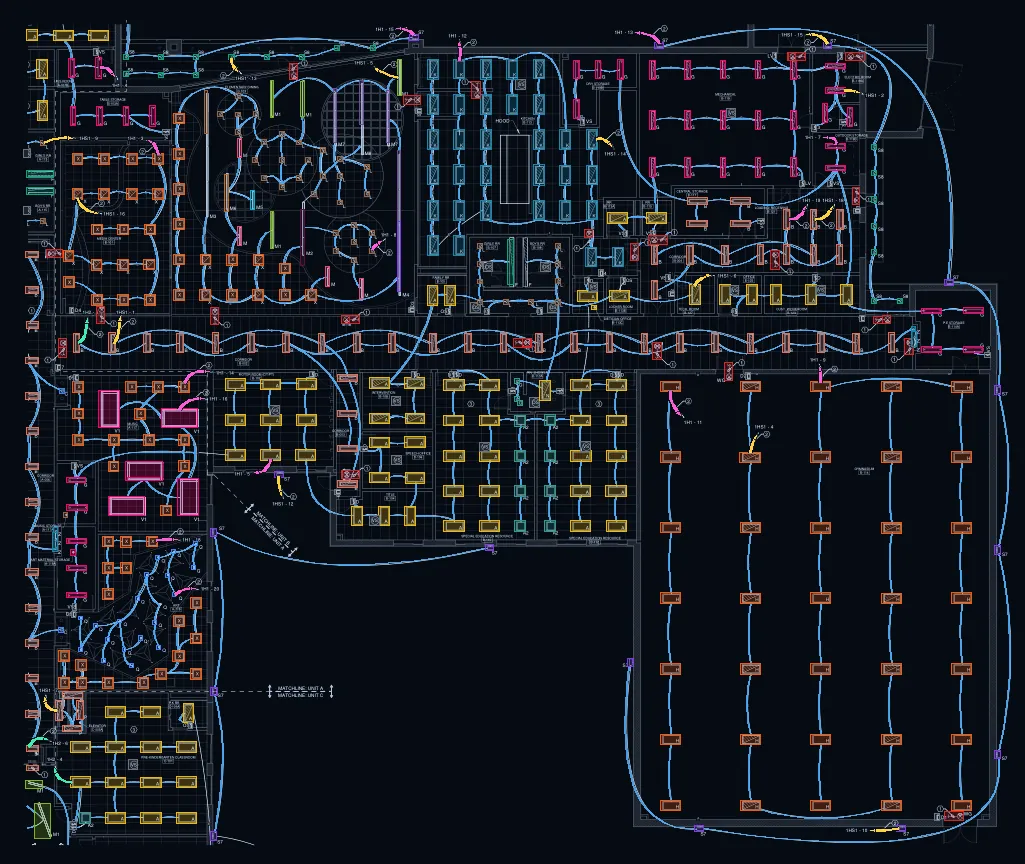
InstantTakeoff runs that check on every sheet. It counts light fixtures, exit signs and lighting controls by type from tags matched to the fixture schedule, flags a type whose tags have too few counted fixtures beside them, traces branch wiring and home runs, and prices the job from your price list and labor units. The checklist is still yours: the ceilings, the notes, the specification and the judgment calls.
Run the count on one of your own sheets: try a sheet free. No signup, no card.
Questions
What should a lighting takeoff include?
Light fixtures by type, emergency fixtures, exit signs, lighting controls (switches, dimmers, sensors, power packs, relay panels), branch conduit, home runs and wire, plus the supports and equipment the ceilings and heights call for.
How do I check a lighting takeoff before the bid?
Check it against the fixture schedule both ways (every type counted or confirmed absent, every tag on the plans in the schedule), check that each type's tags on the plans have counted fixtures beside them, and compare the totals with a similar past job you know well.
Can I print this checklist?
Yes. Print the page from your browser; the menus and side panels are left off the printout.